Hedge Trimming in Sidcup

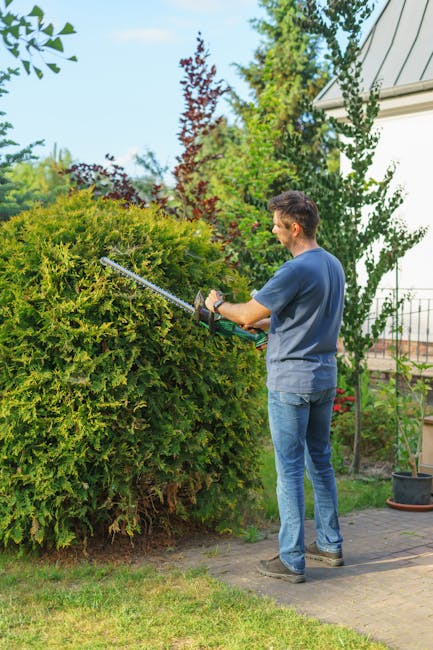
We provide hedge trimming in Sidcup for gardens that need neat shaping, controlled growth and a tidy finish through the seasons. The work can include regular clipping for formal hedges, lighter reduction for softer boundary planting, and careful attention to overgrown sections that have begun to lose form. A well-cut hedge does more than look orderly: it helps keep lines defined, improves access along paths and fences, and supports healthier growth when cut at the right point in the year.
Our approach is practical and measured. We trim to the shape your hedge already needs, rather than forcing a style that does not suit the plant or the space. That can mean a clean top line, straight sides, eased corners or selective reduction where growth has become uneven. For customers comparing options, a services overview can help you understand how hedge work fits alongside other garden tasks, while the detail on hedge trimming explains the main type of work in more depth.
If you are planning seasonal maintenance or dealing with an untidy boundary, request a quotation when you are ready and we can discuss the hedge, the finish you want and any access points that matter. Some jobs are simple annual cuts; others need more careful reshaping after longer growth. Either way, the aim is clear, even results with minimal disruption to the rest of the garden.
Routine hedge care and shaping
Regular hedge trimming keeps growth within sensible limits and prevents a hedge from becoming too broad, top-heavy or difficult to manage. The right cut depends on the species, the season and the hedge’s purpose. Boundary hedges often need a straighter, more uniform result, while ornamental hedges may benefit from a softer profile that still looks deliberate. A good trim keeps the hedge useful as a screen or border without letting it dominate the garden.
For many customers, the choice is between a light maintenance cut and a more pronounced reduction. Maintenance trimming removes current-season growth and preserves the established outline. Reduction work is more involved because it deals with size, not just surface appearance. If you are not sure which option is sensible, our team can assess the condition of the hedge and explain what the cut is likely to achieve. You can also compare it with broader garden maintenance if you want regular care beyond hedge work alone.
Good hedge care also considers the plant itself. Cutting too far in the wrong place can expose bare stems or leave gaps that take time to recover. Trimming with restraint, by contrast, keeps growth dense and helps the hedge hold its shape. For a balanced finish, we look at the hedge as a whole: the base, the top, the light it receives and the way it meets fences, walls, lawns or paving.
Hedge reductions and overgrowth control

Some hedges are no longer just in need of a tidy-up; they have become too tall, too wide or too uneven for the space they occupy. In those cases, a reduction may be more suitable than a standard trim. This type of work aims to bring the hedge back to a manageable size while keeping as much healthy growth as possible. It is especially useful where the hedge has started to shade borders, crowd paths or lean into neighbouring areas.
Reduction work needs judgment because different species respond in different ways. A suitable cut for one hedge may be too severe for another. We therefore treat each hedge individually and avoid blunt, one-size-fits-all methods. Where a hedge has been neglected for some time, the finish may need to be gradual rather than overly ambitious in one visit. If the hedge forms part of a larger garden tidy-up, related services such as garden clearance may help with the wider space around it.
When overgrowth is tackled well, the result is easier to maintain afterwards. The hedge becomes more manageable, the line of the garden improves and future trimming is less demanding. Careful reduction is often the difference between rescuing a hedge and replacing it later. That is why the work is carried out with an eye on the plant’s structure, not only the immediate visual effect.
Boundary hedges, privacy and clean lines
Hedges often do more than decorate a garden. They shape boundaries, soften views and create privacy between properties or sections of the same plot. Because of that, the finish matters. A hedge that is cut unevenly can look untidy from the road, from a patio or from the neighbour’s side. A well-trimmed hedge, by contrast, gives a crisp outline and keeps the boundary looking cared for without appearing overworked.
There are practical details to consider when trimming boundary hedges. A straight top line may suit a formal edge, while a slightly tapered profile can help the base receive more light. Side faces need enough attention to stay even, especially where the hedge runs alongside a drive, fence or footpath. Where the hedge is part of a wider landscaping plan, the team can also discuss how it relates to the rest of the garden and whether other work from landscaping would complement the result.
For property edges, neatness is not just about looks. A controlled cut helps keep the hedge from spilling beyond its intended line and makes future maintenance simpler. Clean, regular shaping is usually easier to live with than occasional heavy correction. That makes hedge trimming a sensible part of ongoing garden care rather than a one-off tidy when things have already become difficult.
Seasonal timing and plant-friendly cutting
Hedge trimming works best when the timing suits the growth pattern of the plant. Some hedges respond well to more frequent light cuts, while others are better treated with less frequent but carefully planned maintenance. Cutting at the right time helps preserve density, reduce stress and keep the hedge looking even for longer. It also helps avoid unnecessary regrowth that can make the hedge look untidy soon after the work is done.
We aim to match the level of trimming to the hedge’s condition and the season’s demands. That means taking into account new shoots, thicker older growth and any areas that may already be thin or patchy. If a hedge is recovering from previous neglect, a cautious approach is usually preferable. For gardens that also need grass kept in shape, the related lawn mowing page shows how the same garden can be maintained in a coordinated way.
Good timing also affects the customer’s experience. A sensible schedule can reduce how often a hedge needs corrective work and make each visit more predictable. That does not mean every hedge follows the same timetable; species, position and the desired finish all matter. The key is to trim with the plant in mind so the hedge keeps its form rather than repeatedly bouncing back into an uneven shape.
How the trimming is planned
Before any hedge is cut, it helps to understand what the customer wants from it. Some people want the hedge kept compact and formal, while others simply want it brought back within bounds and made easier to maintain. The intended finish, the hedge’s present condition and the access around it all influence the work. A clear conversation at the start avoids unnecessary cutting and helps the result match the garden.
Useful details usually include the hedge length, approximate height, whether both sides need attention and whether any sections are difficult to reach. If there are gates, narrow passages or plants growing close to the hedge, those points are worth mentioning too. You do not need to prepare a perfect plan, but a little information helps shape the visit. Where pruning involves trees close to the hedge line, our tree lopping and removal service may be relevant for separate woody growth that is not part of the hedge itself.
The aim is to make the work efficient and tidy rather than rushed. Planning also helps with the finishing touches: clearing the cuttings, checking the overall line and ensuring the hedge sits naturally within the rest of the garden. If you want to move ahead, send through a brief description of the hedge and we can discuss the best next step.
What a tidy hedge changes in the garden
A hedge that has been trimmed properly does more than improve the boundary. It can make a garden feel calmer, more balanced and easier to use. Paths are less obstructed, beds receive more light where appropriate, and the overall outline of the space becomes clearer. Even a modest trim can have a noticeable effect because the hedge often frames the whole garden and influences how everything else reads visually.
For some customers, the main benefit is simply control. Hedges that grow unchecked can take over corners, crowd seating areas or hide the shape of a small garden. Once the hedge is under control again, it becomes easier to combine with other maintenance tasks. If the space also needs broader tidying, you may want to look at landscape gardening for work that goes beyond cutting and into the arrangement of the garden itself.
There is also a practical benefit to keeping hedges in good condition over time. When the structure is preserved, the next trim is usually easier to carry out and the result tends to be neater. That means less corrective work and a more consistent appearance from one visit to the next. For many gardens, that regularity is worth as much as the visual improvement on the day.
About Sidcup

Sidcup is a district in south-east London within the London Borough of Bexley, historically part of Kent before the expansion of the capital changed administrative boundaries. The area developed along older routes between London and Kent, and its growth accelerated with the arrival of rail transport in the nineteenth century. Today Sidcup combines suburban streets, local shopping areas and large green spaces, giving it a character that is both residential and well connected. Its centre includes a mix of twentieth-century development and earlier surviving buildings, while the surrounding neighbourhoods spread into quieter streets and pockets of mature planting.
One of the area’s best-known institutions is Queen Mary’s Hospital, while the nearby borough and surrounding districts contain parks and open land that shape the feel of the place. Sidcup Place, a historic house now associated with local use, is among the notable reminders of the older landscape, and the wider locality still reflects its layered past in road patterns, older parish references and periodic redevelopment. There are also several schools, churches and community facilities that contribute to the everyday rhythm of the district, alongside routes that connect it with Bexley, Chislehurst, Blackfen and other nearby parts of south-east London. Green corridors and roadside trees help soften the suburban character, especially away from the busiest streets.
For visitors and residents alike, Sidcup is less about a single landmark than about the blend of everyday urban life, transport links and accessible open spaces. The area sits within a broader part of London where local identity remains strong, yet it is also closely tied to the wider capital. That combination has helped Sidcup keep a recognisable centre while continuing to evolve, with housing, shops and communal facilities all contributing to a settled but changing environment.
Related garden work alongside hedge trimming
Hedge trimming often sits alongside other outdoor maintenance tasks, especially where a garden has grown unevenly over time. Some customers want the hedge brought into line with the lawn, while others want nearby planting beds, edges or access routes improved at the same time. It is usually best to think about the whole garden in stages so that the hedge does not look neat while everything around it remains unruly. A coordinated finish tends to feel more natural.
If the work area includes fallen clippings, dense cuttings or other accumulated garden waste, a combined tidy-up can save time and avoid repeated handling. In some gardens, the hedge may simply be one part of a larger renewal plan involving trimming, clearing and reshaping. Where surfaces or borders need attention too, decking services may be relevant for separate outdoor features that sit close to the hedge line and affect how the space is used.
Where the focus is on the whole garden rather than the hedge alone, it is helpful to decide what should be kept, what should be reduced and what should be removed. That makes the result more coherent and avoids finishing one part beautifully while leaving the rest unresolved. Clear priorities at the outset usually lead to a better overall finish.
Prices, access and quotation details

The cost of hedge trimming depends on several practical factors rather than on a single fixed rule. Hedge height, length, thickness and accessibility all affect the amount of work involved. So does the degree of reduction required: a light maintenance cut is different from a hedge that has grown well beyond its preferred size. If the hedge is close to fragile planting, awkward boundaries or hard-to-reach sections, those details can also influence the quote.
When asking for a quotation, it helps to describe the hedge clearly and include any points that may affect access. A few straightforward notes are often enough. If you already know which parts need trimming and which parts should be left alone, that makes the discussion easier. For practical information about how we handle enquiries and payment-related matters, the pages on pricing and quotes and payment and security are available for reference.
To move forward, you can ask for a quotation and we will talk through the hedge and the work you want carried out. If you need to know how we handle standards and site care more broadly, our insurance and safety page gives an additional overview. The next step is simple: describe the hedge, the finish you want and any access concerns, and we can take it from there.
Keeping the garden manageable after the cut
Once a hedge has been trimmed back into shape, it is usually easier to keep the surrounding garden under control. The hedge sets the tone for the border, the path and the boundary, so even a modest improvement can make a space feel more ordered. For some customers that is the main aim; for others it is the first stage in restoring a garden that has become too busy to enjoy properly. Either way, a well-cut hedge supports the rest of the maintenance plan.
Longer-term care is often simpler than corrective work. If a hedge is trimmed regularly, the shape stays more even, the growth is easier to manage and the amount of time needed for each visit is usually reduced. Should the wider garden need further attention later on, our garden clearance and recycling and sustainability pages explain how cuttings and other garden materials can be dealt with responsibly as part of a larger tidy-up.
Ready to make the hedge easier to live with? Keep the details brief, include the hedge height and length if you know them, and request a quotation when you are ready. A clear description helps us understand the work and suggest the most suitable approach for the space.