Recycling and Sustainability — Hedge Trimming Sidcup
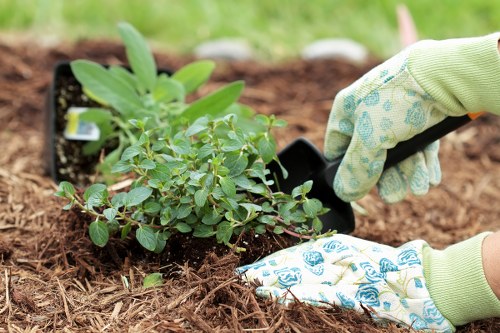 Hedge Trimming Sidcup is committed to combining professional garden care with conscious, eco-friendly waste disposal. Our approach to hedgerow maintenance in Sidcup focuses on maximising reuse and recycling, cutting carbon emissions and supporting local circular-economy initiatives. We treat every cut branch, pruned shrub and bag of green waste as a resource: from chipped mulch returned to your beds to segregated materials sent to the appropriate recycling streams.
As a locally rooted service, Sidcup hedge trimming practices are aligned with borough policies for waste separation and recycling. We follow local collection systems for dry recycling, food and garden waste, and we adapt to the London Borough of Bexley (and neighbouring borough) guidelines when disposing of materials off-site. Our target is ambitious but measurable: a 75% recycling and reuse rate for all site-generated green waste within 12 months, rising to 85% as we scale partnerships and low-carbon transport.
 To achieve this, we rely on efficient sorting on-site and careful route planning. Where possible, timber offcuts suitable for reuse are separated and offered to community reuse centres and social enterprises. Mixed green waste that cannot be reused is directed to local transfer stations and civic amenity sites that process garden waste into compost or woodchip. We work with borough transfer depots serving Bexley and neighbouring authorities so that every tonne of hedge clippings follows the correct, low-impact path to composting or energy-recovery facilities.
Partnerships with Charities and Community Groups
We believe sustainable hedge care is also social. Sidcup hedge maintenance includes partnerships with local charities, community gardens and horticultural groups to divert usable materials away from landfill. Rather than treating all green waste as refuse, we identify items that can be reused — potted plants, intact soil, clean bricks or paving stones — and donate these to groups that regenerate community spaces.
Who benefits from our reuse programme
Our collaboration list includes local community gardens, allotment associations, horticultural charities and social enterprises that accept garden supplies and structural materials. Typical donation categories include:- Reusable potted plants and saplings
- Clean topsoil and mulch for community flowerbeds
- Sound timber for small construction or craft projects
- Garden tools and wooden planters in good condition
We also work closely with civic amenity sites to ensure that materials unsuitable for reuse are processed correctly. The boroughs’ approach to waste separation — separating organic waste, dry recyclables and residual waste — enables us to send green waste to composting facilities and paper/card packaging to the right streams. This careful separation helps boost the overall recycling percentage for the area while keeping disposal costs and emissions low.
Our commitments extend beyond waste sorting. We use low-carbon vans and sustainable logistics to keep the carbon footprint of each garden visit minimal. Fleet choices include electric vans supplemented by efficient hybrids for longer routes, plus the selective use of renewable biofuel blends where charging infrastructure limits apply. Each vehicle is fitted with route-optimisation software and telematics so that hedge trimming runs across Sidcup and nearby neighbourhoods are consolidated and run with fewer miles.
 In practical terms, low-emission transport means fewer return trips to transfer stations and more capacity for on-site processing such as chipping and composting. Wood chipping is a central tactic: branches and prunings are chipped and either reused as mulch on-site, supplied to local landscapers, or sent to municipal composting facilities which convert organic matter into soil improver. This reduces truckloads and lowers greenhouse gas emissions from freight.
 Measuring impact is essential. We track the weight and fate of all green waste removed from client properties, reporting yearly on our recycling percentage target and carbon reductions from low-carbon vans and route efficiency. Our goal is to show clear metrics: tonnes diverted from landfill, volume of mulch and compost produced, and estimated CO2e reductions from vehicle improvements. These figures help us refine practices and expand partnerships that support sustainable waste disposal across Sidcup and the broader borough.
Benefits to clients and the community: choosing Hedge Trimming Sidcup for your hedges and boundary pruning means you get professional, tidy results plus the reassurance that your green waste is handled responsibly. Your trimmed hedges help local biodiversity when we retain habitat piles where appropriate, and chips returned as mulch protect soil moisture and suppress weeds — reducing the need for synthetic inputs.
We continuously review borough policies and best practice for household and commercial green waste. By aligning our services with local separation schemes and maximising donations to charities and community projects, we help increase the local recycling percentage and strengthen circular-economy activity in the Sidcup area. Our action plan includes routine audits, expanding electric vehicle use, and building more formal agreements with transfer stations and reuse centres.
In short, whether you refer to us as Hedge Trimming Sidcup, Sidcup hedge trimming, or hedge maintenance in Sidcup, our sustainability promise is the same: to minimise waste, support community reuse, and operate with low-carbon vehicles. We welcome opportunities to collaborate with more community partners and to raise the standard for eco-friendly gardening and waste disposal across the borough.